Maki
LIKE
NEVER
BEFORE
What is Maki Sushi Roll
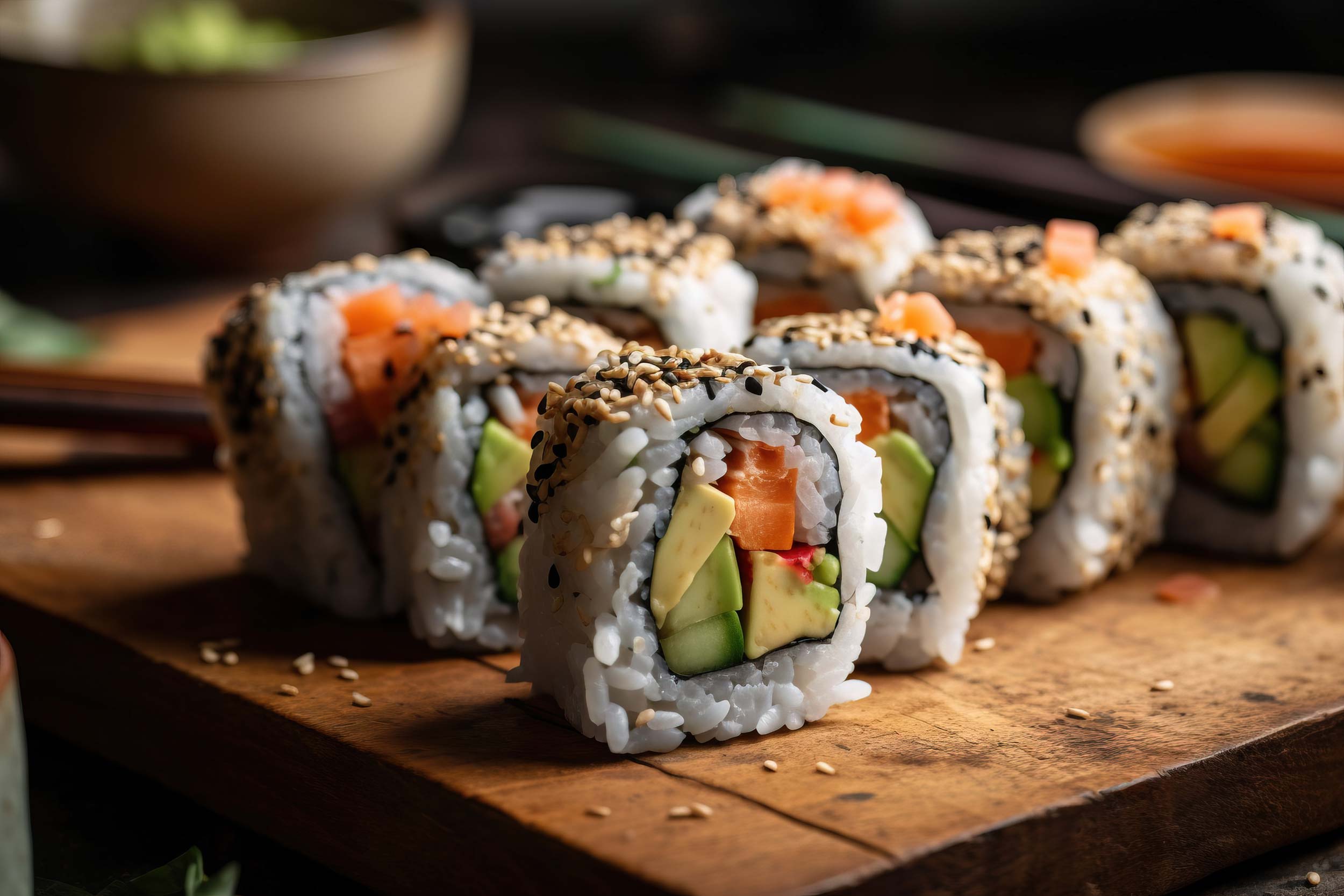
Maki sushi rolls are a type of sushi characterized by a cylindrical or rectangular shape, with a filling of various ingredients traditionally wrapped in seaweed (nori) and surrounded by sushi rice. The sushi roll is typically sliced into bite-sized pieces, presenting a visually appealing cross-section of colorful ingredients. Maki rolls offer a combination of flavors, textures, and visual aesthetics, making them a popular choice among sushi enthusiasts worldwide.

Popular Examples Of Maki Sushi Rolls
CALIFORNIA ROLL
This roll is a creation by a Japanese chef in Los Angeles and consists of crab meat, avocado, and cucumber. The rice is outside (uramaki), and the roll is typically rolled in sesame seeds or tobiko (flying fish roe).
How to Make
Maki Like
Never Before
Handcrafting sushi rolls demands extensive training, leading to a time-consuming and labor-intensive process. The most tedious operation for sushi rolls is spreading the sushi rice onto seaweed (nori) by hand, despite being a trained chef. This method strains kitchen operations, especially in busy settings, affecting table turnover rates and revenue. Conversely, rice sheeter sushi robots reduce production time, ensure uniform results, and operate easily, even for new staff. The result is more opportunity in revenue and time for menu creativity.
01Mix
Mix cooked rice with sushi seasonings
Use a Rice Mixer to mix cooked short grain rice with sushi vinegar to make sushi rice. The Rice Mixers will automatically rotate and blow cool air onto the rice to evenly distribute the seasoning and keep it at the perfect warm temperature suitable for sushi.


02Shaping
Shape seasoned rice into a rice sheet
Place the seasoned sushi rice into the hopper of a Rice Sheeter. The prepared sushi rice will be guided through a series of rollers inside the machine to be flattened into a perfect rice sheet. Ensure that the rice sheet is to your liking by adjusting the four settings—thickness, length, position, and compression—on the control panel.
03Ingredients
Place the inner ingredients onto the rice sheet
Lay a sheet of nori seaweed onto the rice sheet. For rolls with rice on the outside like California rolls, place the inner ingredients of the roll—such as imitation crab, avocado, cucumber, pickled vegetables—on top of the nori seaweed. For a standard roll with nori on the outside, flip the rice sheet with nori over so the rice is face up. Then, place the ingredients on top of the rice.

04Roll
Roll the sheet into a cylindrical shape
Roll the sheet into a cylindrical shape Use either a Maki Roller or a makisu to quickly roll the sheet over the ingredients. With a Maki Roller, press the button or pull the lever to roll the sheet.

05Cut
Cut the roll into even pieces
Place the completed roll into a Maki Cutter. Press and hold the machine's two buttons at the same time until the maki is lifted upwards through the cutter unit to be sliced into separate even pieces.


